How Hyaluronic Acid Lip Fillers Work Beneath the Skin
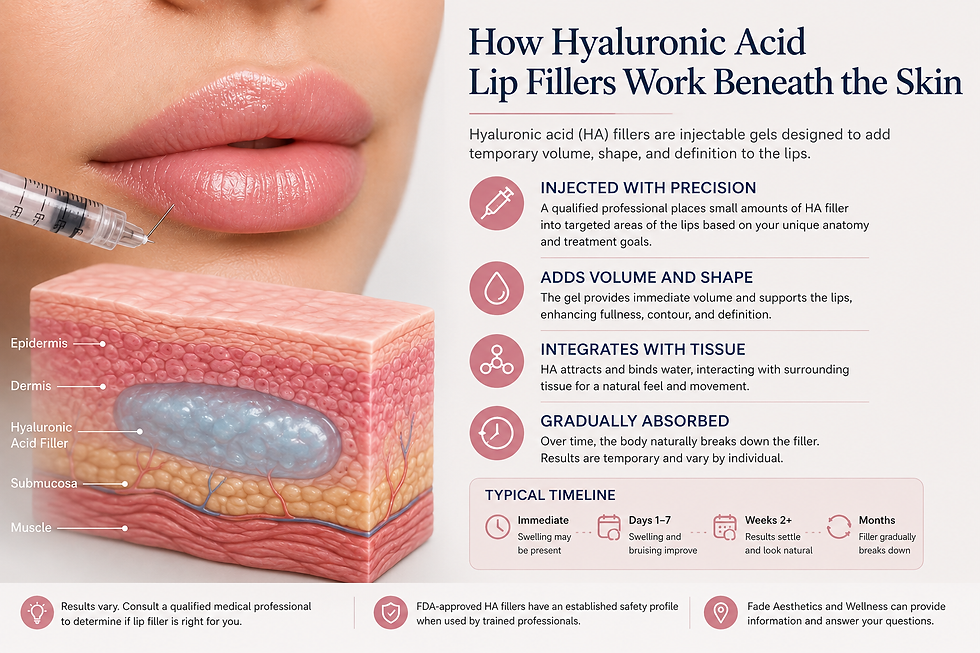
What Is Hyaluronic Acid?
Hyaluronic acid, often abbreviated as HA, is a substance naturally found in the body. In aesthetic medicine, specially formulated hyaluronic acid gels are used in certain injectable dermal fillers to create temporary fullness or smoothness in specific areas of the face. The FDA has approved certain dermal fillers for lip augmentation in adults who meet the applicable age and treatment criteria.
HA filler used for the lips is not simply natural hyaluronic acid placed beneath the skin. FDA-approved products are manufactured as injectable gels with specific formulations and physical characteristics. For example, JUVÉDERM VOLBELLA XC consists of cross-linked hyaluronic acid formulated as a biodegradable, viscoelastic gel.
What Happens When Filler Is Injected Into the Lips?
During treatment, a qualified healthcare professional places small amounts of filler into selected areas based on lip anatomy and the intended treatment plan.
Once positioned within the tissue, the gel provides physical volume. This can affect characteristics such as:
Lip fullness
Shape and contour
Definition around certain parts of the lip
The appearance of some lines around the mouth
The final appearance depends on several factors, including the underlying tissue structure, amount of filler used, product selected, and injection location.
People researching Lip filler treatments may encounter several hyaluronic acid filler formulations, which is one reason treatment planning should consider the specific product rather than treating all fillers as identical.
How Does Filler Interact With Lip Tissue?
Hyaluronic acid filler remains within the treated tissue for a period of time before gradually being broken down and absorbed by the body. FDA guidance explains that most approved dermal fillers produce temporary effects because their materials are eventually absorbed.
Research examining HA filler within human lip tissue has also found that the material can remain present for months while interacting with surrounding extracellular tissue. The rate at which filler changes or degrades can vary rather than following an identical timeline in every person.
Early swelling can temporarily influence how the lips look immediately after injection. For more context on post-treatment care and factors that can affect the early healing period, this related guide provides additional information:https://fadeaesthetics.com/dos-and-donts-after-lip-filler/
Why Results Do Not Last Indefinitely
Hyaluronic acid fillers are considered absorbable or temporary fillers. Over time, the body gradually processes the injected material, so the added volume does not remain permanently. How long an effect persists can depend on the filler material, treatment area, tissue characteristics, and other individual factors.
This also means that one person's experience should not be used as an exact timeline for another.
Understanding Lip Filler in Context
Knowing what happens beneath the skin can help separate the filler itself from temporary changes caused by the injection process, such as swelling or bruising. It can also make discussions about product choice, expectations, and recovery easier to understand.
Fade Aesthetics and Wellness can provide individualized information about lip anatomy, filler options, and expected treatment considerations. For local contact information or directions, readers can view the practice's Google Business Profile when preparing questions for a qualified medical professional. https://www.google.com/maps?cid=11469246037414629725


Comments